What does it mean to run an LLM locally?
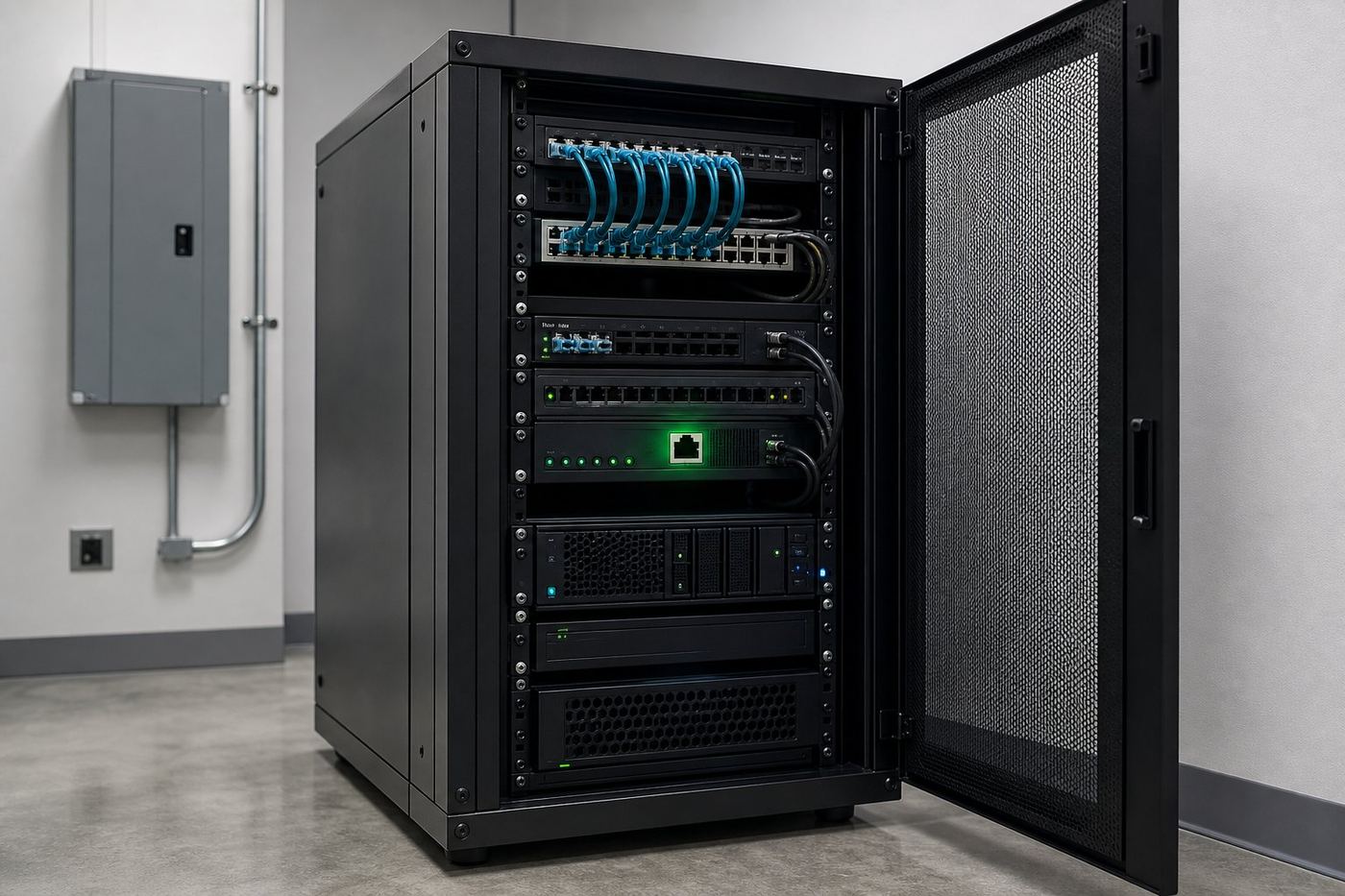
Running an LLM locally means the AI model runs on your own computer or server hardware instead of a remote cloud like OpenAI or Anthropic. Your prompts and data never leave the building, the model works with no internet, and there is no monthly per-seat or per-token bill. VYROX sizes the hardware, installs the runtime (Ollama, LM Studio, vLLM or LocalAI) and an open-weight model, and hands it over working.
How much money does a local LLM save versus ChatGPT or Claude?
Cloud AI is a recurring bill that never stops - roughly RM130 to RM280 per user per month for ChatGPT Team or Claude Team, plus metered API tokens for automation. A 20-person team easily spends RM30,000 to RM60,000 a year, every year. A local LLM is a one-time hardware cost (a capable workstation from about RM18,000, a fully-commissioned team server RM22,000 to RM32,000) that then runs unlimited seats for the price of electricity. Most teams break even in 6 to 14 months including setup, then pay effectively nothing.
Which hardware do I need to run a local LLM?
It depends on model size. A 7-14B model runs on a 16GB GPU or an M4 Mac. A 32B model needs a 24-32GB GPU (RTX 3090/4090/5090) or an M4 Pro. A 70B model needs ~48GB (2x 3090/4090, an RTX 6000 Ada, or a 128GB Mac Studio). 120B-class models fit a single RTX PRO 6000 96GB, an A100, a 128GB Mac, or a DGX Spark / AMD Strix Halo mini-PC. 235B and larger need multi-GPU servers, an AMD MI300X, or a high-memory Mac Studio. Use the
VRAM calculator to check your own hardware, or let us size it exactly.
Which models can I run locally in 2026?
The strongest open-weight models of 2026 include Qwen3.6 (the 27B dense and 35B-A3B MoE), Kimi K2.6 (the leading open agentic coder), GLM-5.1, DeepSeek V4 (and the earlier R1/V3.1), MiniMax M2.7, Xiaomi's MiMo-V2.5-Pro, Google Gemma 4 (writing and vision), plus Llama 4 Scout/Maverick, Mistral Small 3, GPT-OSS 20B and 120B (OpenAI open-weight), Phi-4, and vision models like Qwen3-VL. A 24-32GB GPU runs the best 27-35B-class models at Q4; the trillion-parameter MoEs (Kimi K2.6, DeepSeek V4) run on multi-GPU servers. Quantized to Q4 they match the big cloud models on everyday business work.
Is a local LLM as good as ChatGPT or Claude?
For most business tasks - drafting, summarising, extraction, classification, internal Q&A, coding help and chat - modern open-weight models such as Qwen3.6, Kimi K2.6, GLM-5.1 and DeepSeek V4 run locally at quality very close to the big cloud models. For the hardest frontier reasoning you may still want cloud Claude or GPT for specific jobs; VYROX builds hybrid setups that keep private and high-volume work local and only call the cloud when it genuinely adds value.
What is quantization (Q4, Q8) and which should I use?
Quantization shrinks a model by storing its weights at lower precision. FP16 is full quality at 2 bytes per parameter. Q8 is near-lossless at about half the size. Q4_K_M is the local default sweet spot - roughly a quarter the size of FP16 with only a 2-3% quality drop - so it lets a 70B model fit in about 40GB instead of 140GB. VYROX picks the highest quality quantization your hardware can hold.
Can a TPU or Coral stick run a local LLM?
No. The Google Coral Edge TPU is built for small vision models and cannot run modern LLMs - it has no DRAM and no transformer support. Cloud TPUs and Groq/Cerebras are powerful but are rented cloud services, not on-premise hardware you own. For genuine local LLM hosting the practical accelerators are NVIDIA GPUs, AMD Instinct/Radeon, Apple Silicon, and unified-memory mini-PCs.
Who maintains a local LLM after it is installed?
Every VYROX build ships with remote health monitoring, free model and runtime upgrades, and a same-business-day response SLA. It is built entirely on standard open-source (Ollama, vLLM, Open WebUI) - fully documented, with your IT trained - so there is no black box and no vendor lock-in.
What is the typical payback period for a local LLM build?
Including hardware and setup, most VYROX local builds pay back within 6 to 14 months versus the cloud subscriptions they replace, then run for the price of electricity. The exact crossover date is calculated for your team in the free audit, and is backed by a Break-Even Guarantee.
Everything below is the same answer applied to one industry at a time: the model runs in your building, on your data, and a qualified human still signs off.
BY INDUSTRY, AND BY WORKFLOW
Can a clinic run a local AI for medical notes (AI Doctor)?
Yes. VYROX builds an air-gapped clinical co-pilot that transcribes consultations into structured SOAP notes (Whisper + a local LLM), summarises patient histories, drafts referral and discharge letters, suggests ICD-10 codes, and retrieves from your own formulary and protocols - with patient data never leaving the clinic, supporting PDPA and medical confidentiality. It is decision-support only: a registered practitioner makes every clinical decision and reviews all output; it is not a diagnostic medical device.
Can an accounting firm run a private local AI (AI Accountant)?
Yes. VYROX builds an on-premise accounting co-pilot that extracts invoices, receipts and bank statements (Qwen3-VL), assists reconciliation, drafts MFRS-aware financial statements and management commentary, runs variance and cash-flow analysis, supports tax computation and LHDN MyInvois/SST workflows, and answers questions over your ledger or AutoCount via MCP - all on your own hardware, supporting MIA client-confidentiality and PDPA. A qualified accountant reviews and signs off; it does not replace professional judgment.
Can a law firm run a private local AI (AI Lawyer)?
Yes. VYROX builds an air-gapped legal co-pilot that reviews contracts and flags risky clauses, drafts agreements and letters from your precedent bank, researches your own matter files with citations (RAG), reviews due-diligence and discovery documents at volume, and summarises long judgments - without a privileged document ever leaving the firm, preserving solicitor-client privilege and supporting LPA/Bar Council confidentiality and PDPA. It assists qualified legal professionals and does not provide legal advice; the advocate and solicitor retains full responsibility.
Can I run agentic AI (autonomous AI agents) locally?
Yes. VYROX builds on-premise agentic AI: autonomous agents that take a goal, plan, call tools via the Model Context Protocol (MCP), act and observe in a loop, and self-correct - all on your own hardware. They use frameworks like LangGraph, CrewAI, AutoGen and OpenHands with tool-calling local models (DeepSeek R1, Qwen3-Coder, Kimi K2, GLM-4.6), plus Computer Use / Browser Use to drive apps that have no API. Every agent ships with human-in-loop approval gates on irreversible actions, sandboxing, full audit logs, a kill switch and an eval harness. Typical use cases: IT helpdesk agents, procurement agents, research agents, coding agents and legacy-app RPA.
What is the difference between chatbot, workflow and agentic AI?
They sit on a spectrum of autonomy. A chatbot is conversational and human-in-every-turn - fastest to deploy (days), grounded in your documents via RAG, ideal for Q&A and support. A workflow is a fixed, auditable multi-step pipeline the model fills in - predictable and repeatable, ideal for high-volume operations like invoice processing or email triage (1-3 weeks to build). An agent is autonomous and goal-driven - it decides its own steps, uses tools and loops until done, ideal for complex 24/7 work (3-8 weeks). All three run on the same local hardware; VYROX helps you start with a chatbot and graduate to workflows and agents as you mature.
What role does VYROX play between a frontier AI model and my business?
VYROX is the grounding layer, the intermediary between a raw frontier LLM (which only knows the public internet) and your specific business (your products, customers, policies and numbers). Rather than handing over an unmodified model and calling it done, VYROX fine-tunes, aligns and continuously retrains the model on your own data, then wires it into your team's daily workflow with guardrails, evaluation and audit logs. That grounding layer, not the base model, is the actual deliverable.
Can I automate document processing with a local AI workflow?
Yes. VYROX builds on-premise AI workflows - deterministic pipelines where a trigger feeds documents through extract, validate, classify, route and write-to-system steps, with retries and exception handling. A vision model (Qwen3-VL) reads invoices, receipts and bank statements; the pipeline validates against a schema and writes to your ERP or AutoCount via MCP. Built on n8n, LangGraph, Flowise or Dify, it runs unattended and fully auditable, with your data never leaving your network.
Why should a government agency use a local LLM instead of ChatGPT, Claude or Gemini?
Cloud LLM vendors like OpenAI, Anthropic and Google process prompts on servers outside the country, under foreign law - the US CLOUD Act, for example, can compel a US-based vendor to disclose data it holds even when the customer is a foreign government, regardless of where that data is physically stored. Every prompt sent to a public cloud AI is a cross-border data transfer and a potential leak of citizen records, case files or classified material. A local LLM runs entirely on hardware the agency owns, inside its own building or private network, so citizen and state data never leaves government-controlled infrastructure. This satisfies data governance, data privacy and public-sector data classification requirements that a foreign SaaS API structurally cannot. See
Government & sovereign AI for the full briefing.
What is data sovereignty and why does it matter for AI in government?
Data sovereignty means data is subject to the laws of the country where it is collected and stored, not the laws of wherever the server happens to sit. When a ministry sends prompts to a foreign cloud LLM, that data becomes subject to the vendor's home jurisdiction - a loss of sovereignty over citizen and state information. A local LLM deployed on government-owned hardware inside the country keeps data fully within national jurisdiction at all times, which is the baseline requirement most national AI governance frameworks and public-sector ICT security policies expect for classified or citizen personal data.
Can a local LLM guarantee zero data leak for government use?
An air-gapped local LLM with no outbound internet connection has no network path for data to leave through - there is no vendor server to breach, no cloud account to compromise, and no prompt log sitting on infrastructure you do not control. This makes zero data leak an architectural property, not a policy promise: even if usage doubled to 100%, none of it would reach a cloud vendor. VYROX combines air-gapped or private-network deployment with role-based access control, full audit logging and encryption at rest and in transit, so government customers get both the physical guarantee and the audit trail regulators and auditors-general expect.
How does a local LLM support national AI governance requirements?
National AI governance frameworks such as Malaysia's National AI Roadmap and National Guidelines on AI Governance & Ethics, and equivalent frameworks across ASEAN and internationally, converge on transparency, accountability, human oversight and auditability. A closed commercial cloud API is a black box - the agency cannot inspect the model, freeze its version, or fully audit what data went in and what came out. A local, open-weight LLM gives full model provenance, a fixed version under formal change control, complete audit logs of every query, and the ability to demonstrate exactly how a decision or output was produced - to Parliament, an auditor-general, or a court, on demand.
Where should I start if I am completely new to local AI?
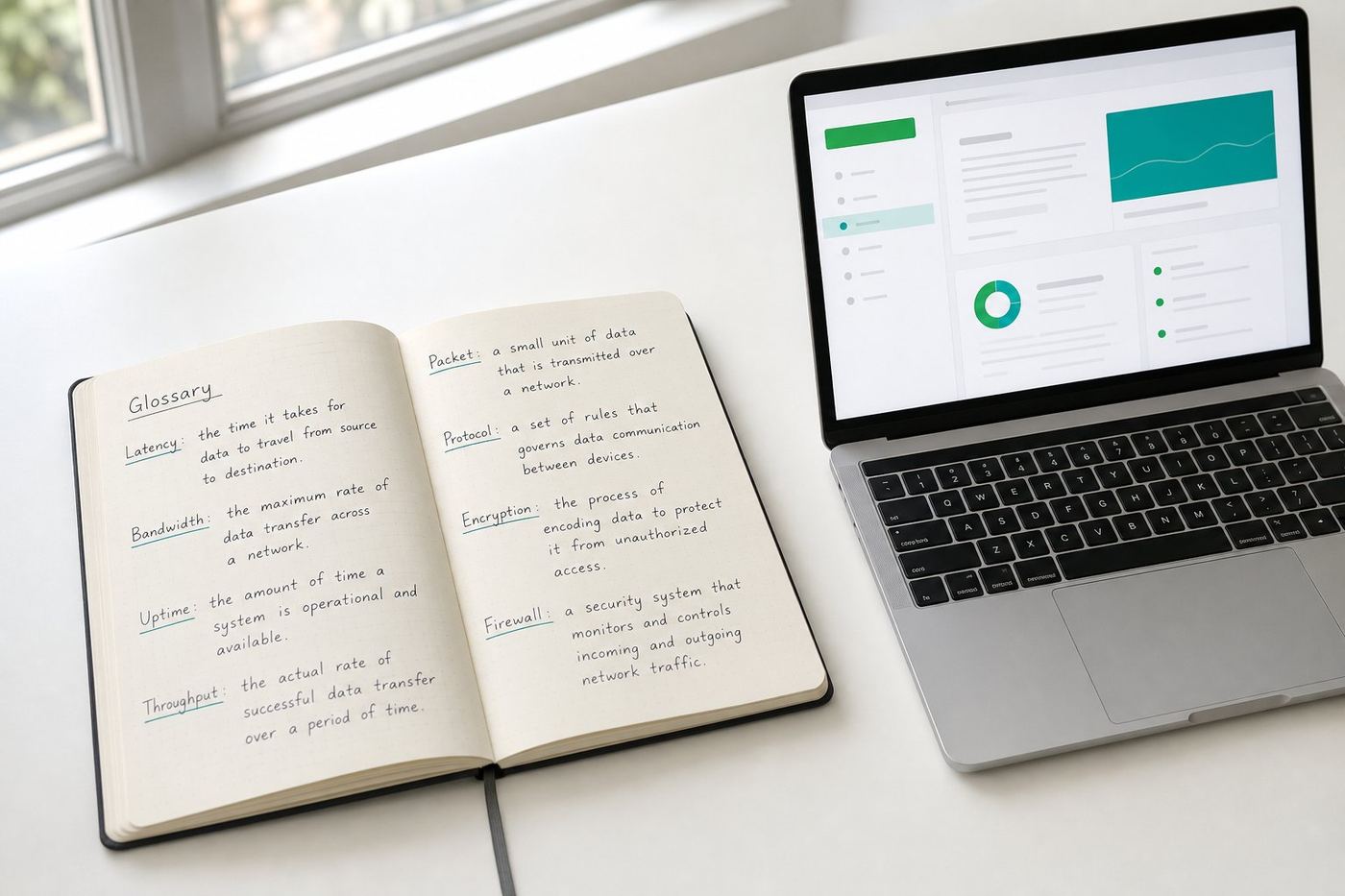
Start with the glossary above so the terms in every other page make sense, then read the cloud vs local comparison on this page for the real numbers. From there, the
Models & Hardware page shows what you can actually run, and
Pricing turns that into a costed build and payback date. Most people finish that reading in under 20 minutes, then book the free audit to get numbers specific to their own team.
How do I estimate my own break-even point before booking a call?
Take your current combined monthly cloud AI spend (seats plus metered API usage) and divide it into the build cost of the matching VYROX tier from the
Pricing page. A team spending RM3,000 a month against a RM22,000 build reaches break-even in roughly 7 months, matching the worked example on the overview page. The free audit calculates this exactly for your own usage rather than an illustrative example.
What should I ask an AI vendor before signing anything?
Twelve questions cover almost all of the risk: where the data goes and who can read it, the three-year total cost rather than the first invoice, what happens if the vendor closes, which model version you are on and whether it can be frozen, how success is measured, what the system can do without human approval, who can see which documents once indexed, how it behaves when it does not know, how many people can use it at once, what you own versus rent, who fixes it and how fast, and what it is genuinely bad at. The
buyer's checklist on this page lists each one next to what a straight answer sounds like, and next to VYROX's own answer.
Do I need fine-tuning, or is RAG enough?
For most first projects, RAG plus good prompting is enough and fine-tuning is not needed. The rule of thumb: facts belong in RAG, habits belong in a fine-tune. If the model does not know your products, prices or policies, that is RAG, because a document in an index is corrected by replacing the document and the answer can cite its source. If the answers are correct but the tone or format is wrong, that is prompting. Fine-tuning earns its cost when you need a very specific in-house style or label set reproduced consistently, and it has to be redone when you move to a newer base model. See the decision table in the
expanded glossary.
What is the most common mistake companies make when starting with AI?
Buying seats for everyone. Licences go to the whole company, most are used twice and forgotten, and the bill recurs anyway. Roles limited by process rather than by writing and analysis get very little from a chat window. Start with the ten to twenty people whose day is reading, drafting, checking and deciding, prove the value there, then widen. The other frequent ones are starting with the hardest use case, skipping the document clean-up, having no way to measure whether it works, and indexing the entire shared drive without mirroring existing permissions. All eight are set out in
Eight ways a first AI project goes wrong.
How do I measure whether an AI deployment is actually working?
Decide the measures before deployment and take a baseline first, using numbers you already track: time per one specific recurring task (time ten real examples by hand beforehand), volume handled without escalation to a senior person, the eval score on a golden set of thirty to a hundred real questions from your own business, weekly active users within the named pilot group, and cloud AI subscriptions actually cancelled measured against the build cost. Re-run the eval after every model, prompt or document change so a regression is caught before users meet it.
What is prompt injection, and does it affect a local AI?
Prompt injection is when a document, email or web page contains text written to give the model new instructions, for example telling it to ignore its rules and send a file out. It affects any system that lets a model read untrusted content, local or cloud. Running locally removes the cross-border and vendor-logging risk but not this one. The defence is architectural rather than clever wording: treat all retrieved content as data and never as instructions, keep role-based access control on what the model can reach, put every irreversible action behind human approval, and keep audit logs so an attempt is visible after the fact.