The first use case, the data it needs, and what not to start with.
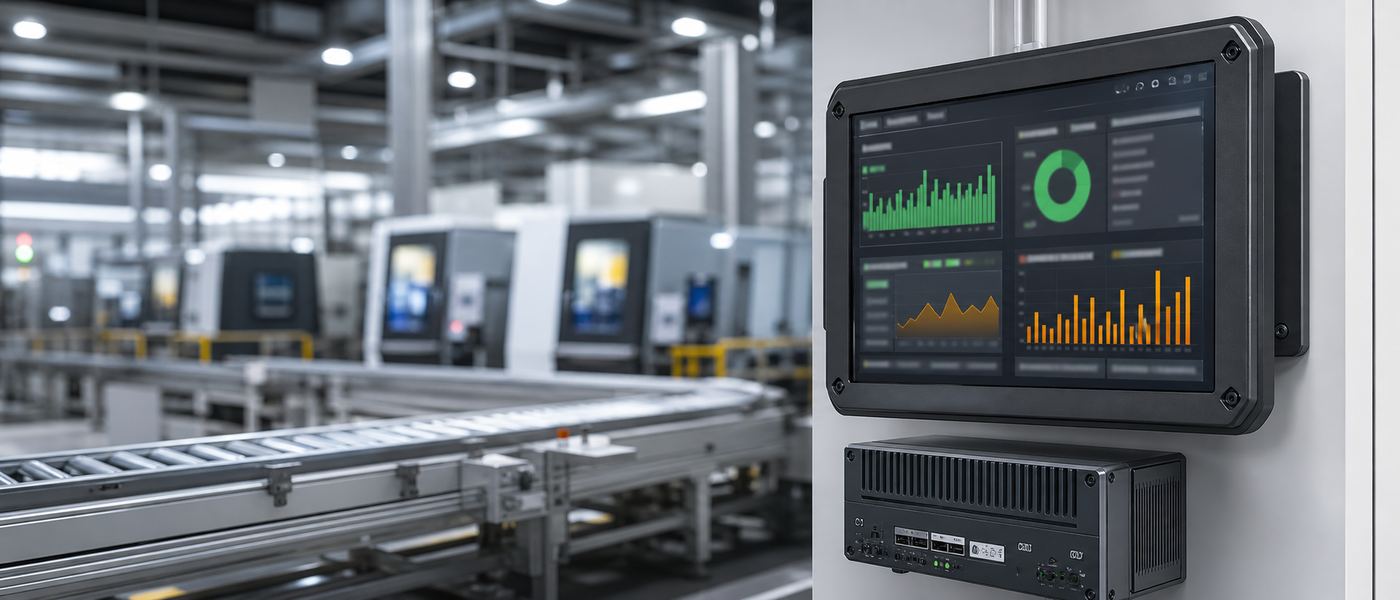
Standard operating procedures, machine manuals, tooling drawings, quality deviation reports and maintenance logs. The information already exists, but it lives in PDFs, shared drives and the heads of two long serving engineers. A private AI turns that pile into something a technician can ask a question of, without any of it leaving the plant.
A technician types a symptom or a part number and gets the relevant procedure back with the page and document it came from. This beats search because the question is asked in plain language and the answer is assembled from several documents at once.
Equipment manuals, standard operating procedures, work instructions, quality deviation and non-conformance reports, maintenance and breakdown logs, and tooling or CAD drawing indexes. Scanned paper works too, but it needs a text layer first.
Process parameters, tolerances, supplier terms and tooling designs are competitive assets, not personal data. Pasting them into a consumer chatbot is the leak that will not show up in any audit report. On-premise removes the route entirely, and the plant floor often has poor connectivity anyway.
One production line or one equipment family, one document set, and the maintenance and engineering team as users. Load the manuals and SOPs for that line only, get the answers trusted, then widen to the next line. Small enough that the engineers who own the documents can verify the answers themselves.
Do not start with automatic quality decisions, predictive maintenance scheduling, or anything that writes back into the MES or ERP. Those need clean historical sensor data and a validated model, which is a different project. Also avoid starting with drawings alone, since a general model reads text far more reliably than it reads engineering geometry.
Product specifications, stock policies, pricing rules, supplier terms and returns procedures. Counter staff and inside sales teams answer the same questions repeatedly, and the answer is usually correct but slow to find. This is a back office assistant first, not a customer facing bot.
Inside sales and counter staff ask about specifications, compatibility, warranty terms, stock policy or a supplier's minimum order, and get a sourced answer instead of interrupting a colleague. Same tool drafts supplier emails and quote cover notes.
Product catalogues and spec sheets, supplier price lists and terms, warranty and returns policies, promotion rules, and past quotations. A read only extract of stock levels can be added later once the document answers are trusted.
Supplier cost and rebate structures, negotiated terms and customer lists are exactly what you would not want circulating outside. Customer contact records also make this personal data, which brings PDPA obligations. Keeping the whole set on hardware you own keeps both problems in one place.
One product category or one branch, with the catalogue and policy documents for it, used by the counter and inside sales team. The measure of success is simple and observable: fewer escalations to the one person who knows everything.
Do not put this in front of customers on day one. A public facing bot needs guardrails, tone control, and a clear escalation path, and it fails loudly when it is wrong. Also do not start with live inventory questions, because the answer is only as good as the accuracy of your stock data, and that is an operations problem rather than an AI one.
Schools, colleges and universities sit on material that is both routine and sensitive: policies, curriculum documents, past papers, administrative circulars, and student records. The routine part is where the value is. The sensitive part is why the system should be on a machine the institution owns.
Staff and administrators ask about examination regulations, admission criteria, fee policy, timetabling rules or accreditation requirements and get a sourced answer. Teaching staff use the same system to draft lesson material, rubrics and question banks from the approved syllabus.
Academic handbooks and regulations, syllabus and curriculum documents, internal circulars and memos, past examination papers, and accreditation submissions. Student records stay in a separate, restricted collection with its own access rules, if they are included at all.
Student records are personal data, and in schools they are frequently the personal data of minors, which raises the stakes on where processing happens. An institution can also give staff a sanctioned tool so nobody pastes a student's disciplinary note or medical remark into a free chatbot. See the data privacy guidance for the controls involved.
One department or one administrative function, with its handbook, regulations and circulars. Registry and academic administration is usually the cleanest start because the documents are already authoritative and version controlled. Keep student records out of the first collection.
Do not start with automated grading or anything that produces a mark a student can appeal against. Do not start with a student facing chatbot either, since it needs safety handling that a first pilot has not earned yet. And do not load student records into the same collection as general policy documents, because you will want different access rules for each and it is much harder to separate them afterwards.
Property managers work from a library of near identical documents with critical differences: tenancy agreements, house rules, service charge schedules, maintenance contracts and defect records. The work is comparing them and answering questions about them, which is exactly what a document grounded AI is for.
Ask what a specific lease says about renewal, subletting, reinstatement or who pays for a given repair, and get the clause with the document it came from. Also drafts owner and tenant correspondence from the building's own house rules and precedents.
Tenancy and lease agreements, sale and purchase agreements, building house rules and by-laws, service charge schedules, maintenance and vendor contracts, defect and complaint logs, and handover documentation.
Every tenancy file carries names, identification numbers, contact details, bank information and often income evidence. That is a dense concentration of personal data held on behalf of other people, and it is the kind of set nobody wants processed on a third party service under terms they did not write. Local processing keeps it under the manager's own control.
One building or one managed portfolio, with its leases, house rules and maintenance contracts, used by the property management team. Clause lookup and correspondence drafting are enough to prove the value, and both are checked by a person before anything is sent.
Do not start with anything that gives a legal opinion on a lease or generates a notice that goes out unreviewed. The output is a fast first read of what the document says, not advice on what it means or what to do. Do not start with rental pricing or valuation estimates either, since that needs market data the model does not have and should not guess at.
Freight moves on documents. Bills of lading, delivery orders, customs declarations, packing lists, rate sheets and standard operating procedures for each client. Operations teams spend their day reading them, retyping fields from one into another, and answering status and procedure questions.
The model extracts the fields an operator would otherwise retype from a delivery order, packing list or bill of lading, and flags where two documents disagree with each other. A person confirms before anything is entered. The same system answers questions about a client's specific standard operating procedure.
Bills of lading, delivery orders and proof of delivery, packing lists and commercial invoices, customs declaration formats, rate and surcharge sheets, and the per client operating procedures that govern handling exceptions.
Shipment documents disclose what your clients ship, in what volume, for whom and at what price. That is commercially sensitive for them as well as for you, and several client contracts will already restrict where their data may be processed. An on-premise system answers that clause without needing a discussion about vendor sub-processors.
One document type for one client or one lane. Delivery orders or packing lists are a good first target because the format is stable and an operator can verify the extraction in seconds. Prove accuracy on that one form, then add the next.
Do not start with automatic customs declaration submission or anything that files with an authority without review, because the cost of an error is a penalty rather than a rework. Do not start with route optimisation or ETA prediction either, since those are forecasting problems that need telemetry data, not a language model.
Hotels, restaurants and F&B groups run on procedures that have to survive high staff turnover: service standards, recipes and yields, allergen information, supplier terms, and event and banquet packages. Written down once, asked about constantly.
Floor and kitchen staff ask what the standard is, what is in a dish, which allergens it carries, or what a signed banquet package includes, and get the answer from the group's own documents. The same system drafts internal briefings and standardises menu descriptions across outlets.
Service standard operating procedures, recipe and yield cards, allergen and dietary matrices, supplier price lists and terms, banquet and event contracts, and guest feedback logs with names removed.
Guest profiles, special requests and event contracts contain personal data along with commercially sensitive supplier pricing. For a group with several outlets, keeping one internal system means staff have a sanctioned place to ask, which is a better control than a policy telling them not to use free chatbots.
One outlet or one function, with its service standards and recipe cards. Allergen and dietary questions are a strong first target because the answer must come from a document, must be traceable, and is asked several times a shift.
Do not start with guest facing chat or automated review replies, where a wrong answer becomes a public one. Allergen answers in particular must be presented as a lookup with the source shown, never as the model's own conclusion, and the final word stays with the kitchen.
These three are covered in depth elsewhere on this site, because the workflows, the confidentiality duties and the document types are specific enough to deserve their own treatment. This block is a signpost, not a summary.
Patient notes are the most sensitive category of personal data most organisations will ever hold, and the practical first use cases sit around clinical documentation and internal protocol lookup. The detailed treatment, including where a human must stay in the loop, is on the VYROX AI solutions page.
Client financial records, working papers and engagement files, with a first use case around document extraction and standards lookup. Read the full breakdown, including what should stay manual, on the solutions page.
Privileged client material under a professional duty of confidentiality, where the first use case is normally searching the firm's own precedents and matter files rather than drafting. The dedicated section on the solutions page covers the boundaries that matter.
The first build is retrieval over the organisation's own documents, with a person reading the answer before it is used. What changes between a law firm and a factory is the document set and the consequence of being wrong, not the architecture. If you want the underlying privacy argument rather than the sector detail, the case for keeping AI local sets out how data escapes with cloud tools and why on-premise closes those routes.
The starting tier column names the VYROX build tier that a first single department pilot typically lands on. It is a starting point for a scoping conversation, not a quote: the real driver is how many people use the system at once and how large the document set is.
Swipe to see all columns
| Industry | First use case | Data needed | Typical starting tier |
|---|---|---|---|
| Manufacturing | Ask the manual at the machine | SOPs, equipment manuals, maintenance logs | Desk AI to Studio AI |
| Retail & wholesale | Internal product and policy answers | Catalogues, price lists, returns policy | Desk AI to Studio AI |
| Education | Policy and regulation lookup | Handbooks, syllabi, circulars | Studio AI |
| Property management | Tenancy clause lookup | Leases, house rules, maintenance contracts | Desk AI to Studio AI |
| Logistics & transport | Document field extraction and checking | Delivery orders, packing lists, client SOPs | Studio AI |
| Hospitality & F&B | Standards, recipe and allergen lookup | Service SOPs, recipe cards, allergen matrix | Desk AI |
| Professional services | Precedent and file search | Matter files, working papers, protocols | Studio AI upward |
Tier names and prices are the published VYROX build tiers: Desk AI at RM 9k-19k once, Studio AI at RM 22k-32k once, Engine AI at RM 55k-75k once, Rack AI at RM 180k-500k+ once. Full specifications and what each tier includes are on the VYROX AI pricing page. Tier placement above is an illustrative starting point for a single department pilot, not a sector benchmark.
Not the industry. Four variables set the hardware, and they cut across every sector on this page. This is the part worth getting right before anyone quotes you anything.
A 200 person company where 6 people query at the same moment sizes like a 6 user system. What matters is peak simultaneous requests, which is usually a small fraction of the licence count you would have paid for in the cloud.
The number of documents affects storage and indexing more than it affects the model. The bigger cost is condition: scanned pages with no text layer, duplicates and three versions of the same policy all have to be resolved before answers can be trusted.
Comparing two long leases or reading a full technical manual in one pass needs more memory than answering short questions. Long context work moves a build up a tier faster than adding users does.
Scanned forms, photographed defect reports and drawings need a vision capable model alongside the text one. That is a real requirement in logistics, property and manufacturing, and it changes the model choice rather than the workflow.
A single department pilot with roughly 5 to 8 concurrent users over one document collection is the scenario the Studio AI tier is built for, at a published price of RM 22k-32k once. Against the published typical break-even window of 6 to 14 months, that build would be expected to pay back the subscription spend it replaces inside that range. The exact position depends entirely on what you are paying today, which is the first thing a scoping call measures.
Illustrative, based on the published Studio AI tier price and the published 6 to 14 month break-even window. Not a quote and not a sector benchmark. Hardware specifications per tier are set out on the models and hardware guide, and public sector requirements are covered separately on the government deployment page.
Industry labels are a convenience. What actually determines the first build is the shape of the work, so use these questions instead of the sector heading.
Name the document your team opens most often to answer a question: a manual, a lease, a policy, a rate sheet, a syllabus. That document set is your first collection, whatever your industry is called.
If it is internal staff, start now. If it is customers, students, tenants or guests, start internally first and reach the public audience later, once the answers have been observed to be right.
Rework, or a penalty? Keep the first build in the rework category. Anything with a regulatory, clinical, safety or legal consequence stays under human review and is not the place to begin.
If the honest answer is no, that is the privacy case, and it is the same case in every sector on this page. If the answer is yes, the argument for a local build has to rest on cost and offline reliability instead.
Where all four line up, the first build looks nearly identical no matter which sector you are in. VYROX publishes a typical delivery window of 4 to 8 weeks from specification to a commissioned system, and most builds break even against the subscriptions they replace within 6 to 14 months. If you want to see how those numbers are put together rather than take them on trust, the resources library and the VYROX AI overview both walk through the working.
Book a free 45-minute Local-AI Audit. We look at the documents your team actually re-reads, name the first use case worth building, and give you the costed break-even date in writing.
No deck pitch. Just engineers sizing your build.
Free Local-AI audit